
How Financing a 5 to 10 Unit Building Works in Florida
Financing a 5 to 10 unit building in Florida means commercial underwriting, a state lodging license and county inspections. Here is what changes.
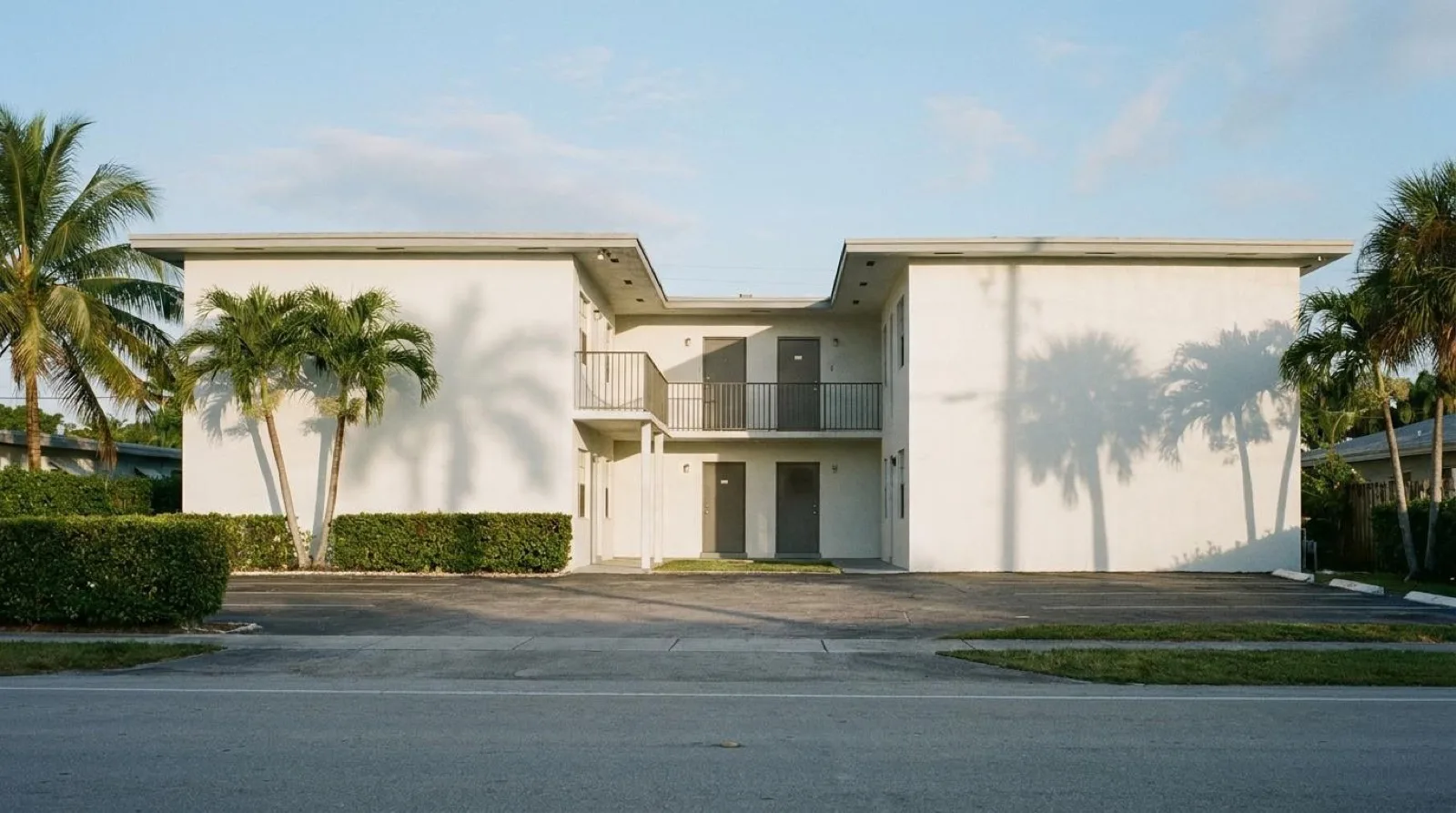
Financing a 5 to 10 unit building in Florida works differently from financing a fourplex, even when the two buildings sit side by side in Hollywood or Lauderhill. The fifth unit moves the loan from home loan rules to commercial rules. It also brings a state license, county inspections and a different tax statute into the deal. This guide covers each change in the order you will meet it.
Why the fifth unit changes the loan
A building with five or more units is commercial property to a lender, so home loan programs stop applying. Fannie Mae, Freddie Mac and FHA home loans cover one to four units only, which is why a fourplex and a five unit building get such different treatment.
On a two to four unit property, the lender starts with you: your income, your credit and your debt to income ratio. Our duplex and triplex financing guide covers that path. On five units or more, the lender starts with the building and asks whether its rent covers the debt.
Consumer mortgage disclosures change too. A loan to buy an apartment building is a business purpose loan, so you do not receive a Loan Estimate or a Closing Disclosure. You receive a term sheet and later a commitment letter, and the terms in them are negotiated rather than standardized. Read both closely, because the protections built into home loans do not carry over.
How lenders size a loan when financing a 5 to 10 unit building
Lenders size the loan from the building's net operating income, then check it against the value. Net operating income is the rent collected minus operating expenses, before any mortgage payment.
The debt service coverage ratio compares that income with the annual loan payments. A ratio of 1.0 means the building breaks even on its debt. Small apartment lenders typically want a cushion above that, often in the range of 1.20 to 1.25, and some ask for more on older buildings.
Two habits of underwriters surprise first time buyers:
- They use their expenses, not yours. A lender typically deducts a management fee, a vacancy allowance and replacement reserves even if you self-manage a full building.
- They use your insurance and tax bill, not the seller's. Both usually rise after a sale in South Florida, and the higher figures reduce the loan the income can support.
Loan to value is the second limit. Expect to bring more equity than you would on an owner-occupied fourplex, typically a quarter of the price or more. Our guide to how commercial real estate loans are underwritten shows how the two limits work together. The mortgage calculator is built for home loans, but it gives a rough principal and interest figure for testing coverage.
Who lends on small apartment buildings and on what terms
Local banks, credit unions and investor lenders that qualify on rental income make most loans in this size range. Fannie Mae and Freddie Mac also run small balance apartment programs through approved lenders, but a five or six unit building in Dania Beach often falls below the loan size those programs are built around.
The terms differ from a home loan in ways that matter later:
- Balloon maturities. Many bank loans are due in five, seven or ten years while the payment is calculated over a longer schedule. You must refinance or pay off the balance at maturity.
- Prepayment penalties. Most programs charge a penalty for paying off early, often stepping down each year. A sale or refinance in the first years can cost more than you expect.
- Personal guarantees. Loans this size are usually full recourse, which means you guarantee the debt personally even when an LLC holds title.
- Third party reports. The appraisal uses the income approach and costs more than a home appraisal. Some lenders add a property condition report or an environmental review.
Investor loans that qualify on the property's income are one route, and our DSCR loan page explains the one to four unit version of that idea. For five units and up, the multifamily loans page lists the programs we place and who each one fits.
If you have a building in mind, request a quote and we will tell you which lender type fits before you write the offer.
Florida licensing starts at five units
Florida requires a state license for most apartment buildings with five or more rental units. Section 509.013(4) of the Florida Statutes treats a building rented for periods of at least 30 days as a nontransient public lodging establishment, and it excludes any place renting four rental units or less unless the units are held out as regularly rented to transients.
In practice, a fourplex with annual leases needs no state lodging license, and the five unit building next door does. Section 509.242 classifies it as a nontransient apartment when 75 percent or more of the units are available to nontransient tenants. The Division of Hotels and Restaurants at the Department of Business and Professional Regulation issues the license and inspects the property.
Ask the seller for the current license early. An unlicensed building is fixable, but lenders and insurers ask about it, and an inspection can turn up railing, smoke detector or egress items you will pay to correct. Cities add their own layer. Many South Florida cities require a local business tax receipt or rental registration for each building. If any unit will be rented by the night or week, different rules apply, covered in our short-term rental rules guide. A building that rents most of its rooms by the night is a lodging business, and lenders underwrite it as a hotel or motel loan on its operating history rather than its leases.
County building inspections on older buildings
Broward and Miami-Dade both require periodic structural and electrical inspections of older buildings, and most 5 to 10 unit buildings are covered. This is separate from the state milestone inspection law, which applies to condominium and cooperative buildings.
Broward County's Building Safety Inspection Program currently calls for the first inspection when a building reaches 25 years of age and every 10 years after, according to city building departments such as Fort Lauderdale's. Exemptions are narrow. One and two family homes and structures under 3,500 square feet are exempt, so a typical 1960s eight unit building in Hollywood is in the program.
Miami-Dade's recertification program generally starts at 30 years and repeats every 10 years. The county exempts single family homes, duplexes and small buildings with an occupant load of 10 or less and 2,000 square feet or less. A six unit building in Little Havana or North Miami usually does not meet that exemption.
Much of this housing stock dates from the 1950s through the 1970s, so the question is rarely whether the building is covered. The question is whether the last report is complete and the repairs are closed out. Ask for the most recent report and the city's sign-off. An open recertification can stall a loan, and required concrete or electrical work changes what you should pay.
Insurance follows the same logic. A building this size is written on a commercial policy, and roof age, wiring and wind protection drive the premium. Insurers also stop binding new policies when a named storm is approaching, so get quotes during the inspection period. Our Florida homeowners insurance guide explains how lenders treat the premium.
Property taxes and closing costs at this size
Your tax bill resets to the purchase price the year after you buy, and Florida's statutes draw a line between nine and ten units. Section 193.1554 covers non-homestead residential property with nine or fewer dwelling units. Buildings with ten or more units are assessed under section 193.1555 with nonresidential property.
Both sections reassess the property at just value as of January 1 after a change of ownership or control, and both limit annual increases after that for non-school taxes. Under section 193.1555, an improvement that raises just value by at least 25 percent can also trigger a reassessment. That matters if you plan a heavy renovation of a ten unit building. Our explainer on Florida Amendment 3 property tax changes for investors covers how the cap changes from 2027.
Closing costs include Florida documentary stamp tax and intangible tax on the new mortgage, the same as a home loan. In Miami-Dade, the county surtax on the deed applies to an apartment building, while Broward and Palm Beach charge no surtax. See who pays what at closing in Miami-Dade and Broward for the details.
What to gather before you make an offer
Gather the building's income records and its compliance records before you offer, because the lender will ask for both. A complete package also shows the seller you can close.
- A current rent roll and every lease
- Twelve months of income and expenses, plus the two prior years if available
- The state lodging license and any city rental registration
- The latest building safety inspection or recertification report, with proof repairs were completed
- Insurance quotes for your ownership, including wind and flood
- Your personal financial statement, a schedule of real estate owned and entity documents if an LLC will take title
Treat the seller's numbers as claims until the leases and bank deposits support them.
Frequently asked questions
Is a 5 unit building residential or commercial for a loan?
Commercial. Home loan programs from Fannie Mae, Freddie Mac and FHA stop at four units, so a five unit building is underwritten on its rental income under commercial or multifamily guidelines.
Can I use an FHA or conventional home loan on a 5 unit building?
No. Those home loan programs cover one to four unit properties only. A five unit building needs a commercial, multifamily or investor loan, even if you plan to live in one of the units.
Do I need a license to rent a small apartment building in Florida?
Usually yes at five units or more. Florida law excludes places renting four rental units or less from public lodging licensing, so a building with five or more long-term rental units generally needs a state license. Your city may also require its own registration.
How long does it take to close on a small apartment building?
Often 45 to 75 days, which is longer than most home loans. The commercial appraisal, any third party reports and the review of leases and inspection records take the extra time.
Ready to talk? Get a free quote or call (973) 862-1489 and a licensed loan officer will walk you through it.


